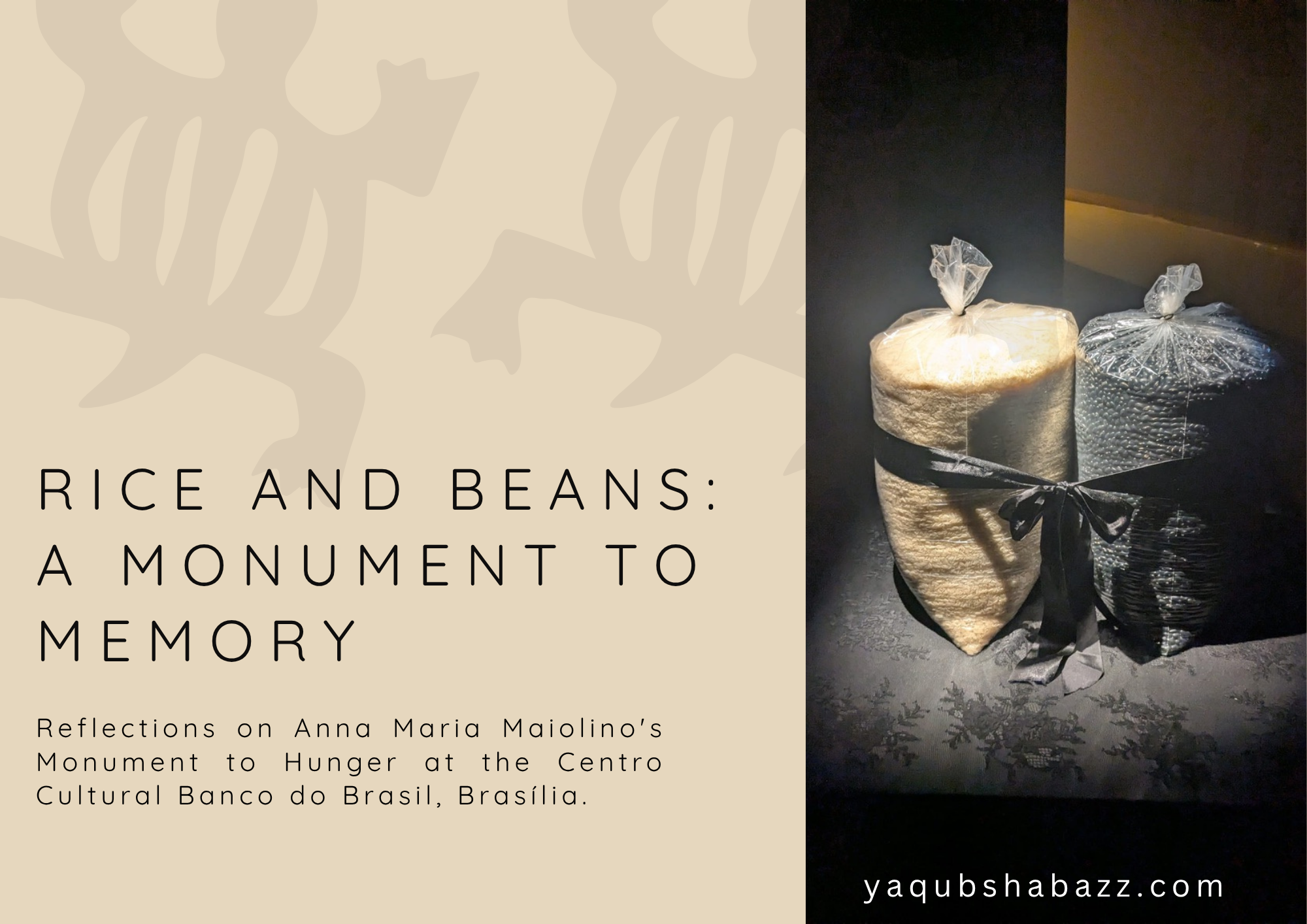
Rice and Beans: A Monument to Memory
An unexpected encounter in a museum in Brasília led me to reconsider how ordinary meals preserve the history of migration, memory, and the African diaspora.

Creativity with Purpose: A Visit to Brazil's National Institute of Technology
As an artist, I often think about creativity as a way of preserving memory, telling stories, and helping people see the world differently. What I experienced at INT reminded me that creativity also has another responsibility. It can restore movement, create independence, and improve everyday life.

A Visual Journal: Rio de Janeiro and Brasília
This collection is an ongoing visual journal of that experience. These photographs document more than the places I visited. They reflect the questions I carried with me and the ones I brought home about creativity, public memory, civic identity, and the role of artists in helping us understand the societies we build.

The Difference Between Looking and Seeing: On art, perception, and the slow development of awareness
“The world speaks quietly through light, posture, silence, color, and even the spaces between words. Most people look long enough to recognize something familiar. Very few remain present long enough to truly understand what they are seeing.”
Ya’qub Shabazz

Some People Learn to Read Books. Others Learn to Read Rooms: On perception, institutional thinking, and the difference between looking and seeing
The eyes perform the act of looking, but the mind processes meaning. We can spend our entire lives looking at the sky without ever truly seeing it. Then one day we study painting and suddenly realize the sky is not simply “blue.” It contains cobalt blue, ultramarine, hints of alizarin crimson, reflected light, atmospheric shifts, temperature changes, and subtle variations we never noticed before.

What Teaching Art in Prison Taught Me About Perception: How confinement alters consciousness and perception itself
For some people, confinement creates deterioration. It breaks people down mentally and emotionally. But for others, something else happens. Some individuals develop profound interior lives.

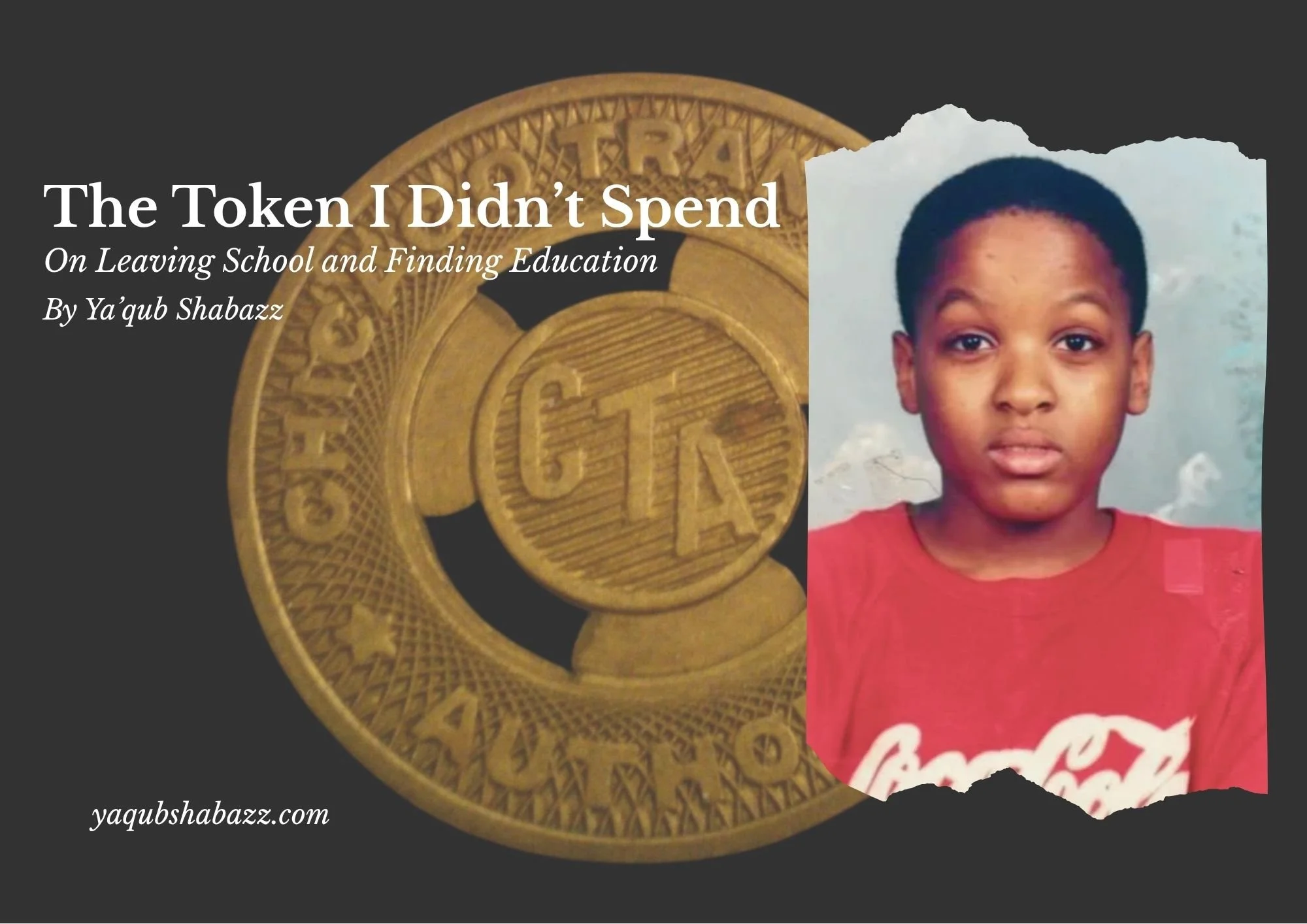
The Token I Didn’t Spend: On Leaving School and Finding Education
What I was hearing in music started to meet what I was seeing in real time. The conversations got sharper. The language got more direct. Hip-hop wasn’t just something you listened to—it was something you moved through.

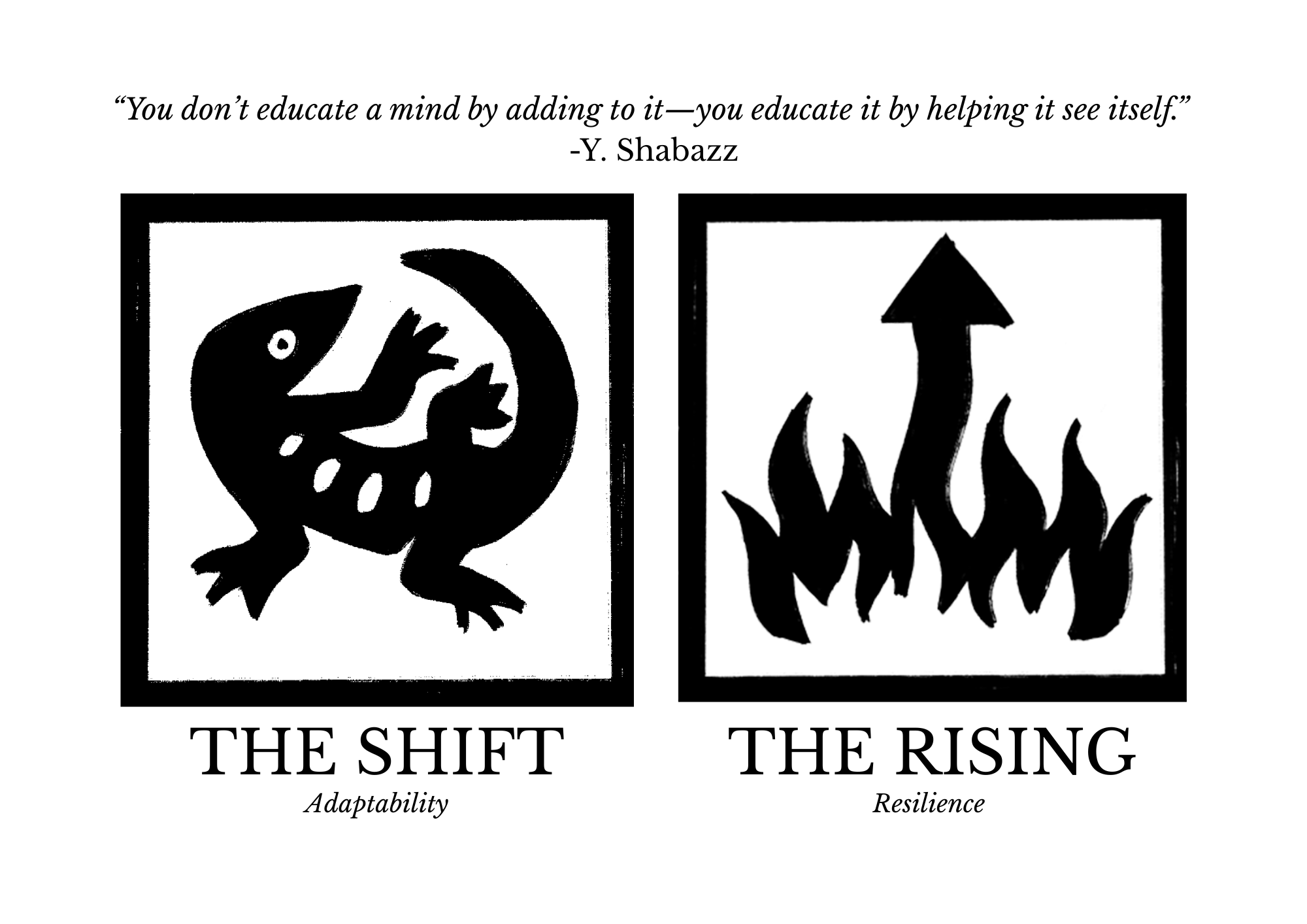
You don’t educate a mind by adding to it—you educate it by helping it see itself.
That’s how I came into art myself. Not through some clean, straight path, but through experience. Through movement between places. Through memory that doesn’t sit still. Mississippi is in me whether I’ve lived there or not. Chicago shaped how I see space, rhythm, pressure, survival. All of that shows up in the work. So when I teach, I’m not trying to shape people into some idea of what an artist is supposed to be, or what a “better person” is supposed to look like. I’m trying to get them to recognize that they already come with something. Something real. Something worth building from.

Some things don’t pass. They return until they are understood.
That is something I’ve come to understand, whether in teaching or in the studio. What sits beneath the surface doesn’t go away just because it’s covered. It remains active.